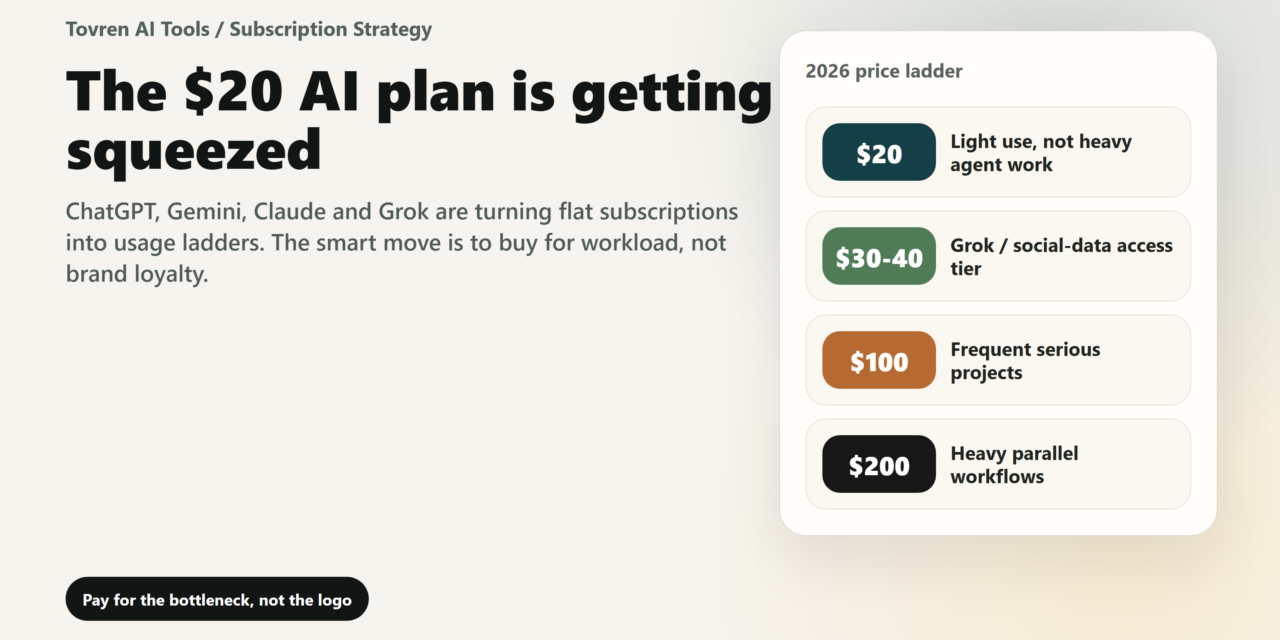
The $20 AI plan is getting squeezed
The old advice was easy: pay around $20 a month for one good AI assistant and move on. In 2026, that advice is too lazy.
The new AI pricing ladder now runs from free plans to $20 personal tiers, $40 social-AI bundles, $100 power-user plans, $200 heavy-use plans, and API or credit-based usage for people whose work does not fit neatly into a monthly subscription. That is why searches for best AI subscription 2026, ChatGPT vs Gemini vs Claude vs Grok pricing, Google AI Pro Ultra, Claude Max pricing, ChatGPT Pro tiers, and Grok Premium Plus are all really asking the same question: which subscription is worth paying for now?
Bottom line: most people should still start with free or one $20 plan. Choose Gemini AI Pro if you live in Google apps and value storage, NotebookLM, and Workspace-style help. Choose Claude Pro if long-form writing, careful reasoning, and code review are your main work. Choose ChatGPT Plus if you want the broadest all-purpose assistant. Choose X Premium+ for Grok only if X itself is part of your work. Move to $100 or $200 only when limits are blocking paid work, not because the plan page made you nervous.
Prices below are based on official U.S. web pricing where available and checked on May 23, 2026. Regional prices, taxes, app-store billing, and plan availability can differ. Reddit threads are used only as community-sentiment signals, not proof of product changes.
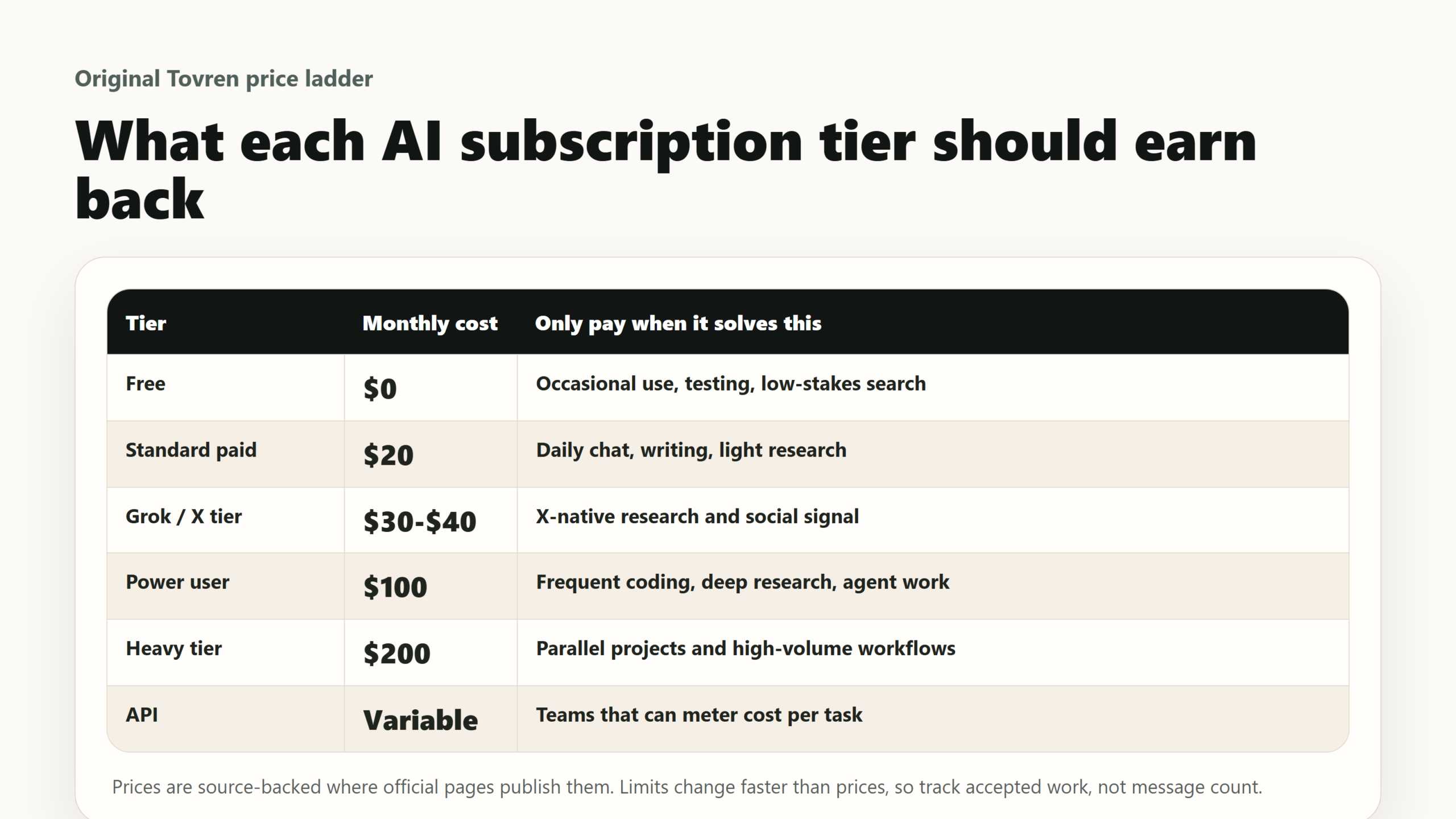
The 2026 AI pricing ladder, simplified
| Monthly spend | Best fit | What to buy | What to avoid |
|---|---|---|---|
| $0 | Occasional users, students testing tools | Free ChatGPT, Gemini, Claude, or Grok access | Relying on free tiers for deadlines |
| ~$20 | Daily personal productivity | ChatGPT Plus, Google AI Pro, or Claude Pro | Paying for multiple $20 plans “just in case” |
| $30–$40 | X-first creators and social researchers | X Premium+ for higher Grok limits and ad-free X | Buying it only as a general AI chatbot |
| ~$100 | Frequent paid work | ChatGPT Pro $100, Claude Max 5x, or Google AI Ultra $99.99 | Upgrading before tracking limit pain |
| ~$200 | Heavy parallel workflows | ChatGPT Pro $200, Claude Max 20x, or Google AI Ultra $199.99 | Using a personal plan as a shared team account |
| Variable | Apps, automations, batch jobs | API or usage credits | Flat subscriptions for unpredictable programmatic work |
What each provider is really selling now
ChatGPT: the broadest general-purpose assistant
OpenAI’s current ChatGPT ladder is no longer just “Plus or Pro.” Its official Help Center describes Plus at $20 for lighter use, Pro at $100 for real projects with 5x higher limits than Plus, and Pro at $200 for heavy lifting with 20x higher limits than Plus. The Pro tiers include advanced tools such as pro models, Codex, deep research, image creation, memory, and file uploads.
The important catch: “higher limits” does not mean “do anything forever.” OpenAI says usage can still face guardrails or temporary restrictions for policy-violating or abusive behavior, including programmatic extraction, credential sharing, reselling access, or using a personal account to power third-party services.
Best for: creators and analysts who need a generalist assistant; developers who use Codex-style workflows; students who want one tool for study, writing, coding, image work, and document analysis.
Watch out for: paying $100 or $200 when your actual bottleneck is not usage but workflow design. If you do one deep research task per week, a $20 plan may be enough.
Gemini: the AI subscription that is also a Google bundle
Google’s pricing is becoming the most “bundle-shaped.” The official Gemini subscriptions page lists Google AI Pro at $19.99/month and Google AI Ultra starting at $99.99/month. The Ultra ladder is explicit: the $99.99 Ultra tier gives 5x higher usage limits versus AI Pro, while the $199.99 tier gives 20x higher usage limits versus AI Pro.
Google AI Pro includes 5 TB of Google storage and access to Gemini in Google apps, NotebookLM, Deep Research, Google Flow credits, Gemini in Chrome, and other Google One-style benefits. Google AI Ultra adds higher access, starting at 20 TB of storage, NotebookLM benefits, and priority access to new innovations including Agent Mode. Google also says Gemini app usage limits are compute-based: prompt complexity, features used, and chat length all matter; limits refresh every five hours until the weekly limit is reached; users can extend limits by buying AI credits.
That last point matters. A secondary Android Central report from May 20, 2026 says Google AI Pro shifted away from simple fixed message counts toward a more credit or compute-based usage window, and that some users feel the effective limits are lower. Treat that as reporting and user experience, not as a replacement for Google’s official terms.
Best for: Google-heavy users, students with Drive-based notes, analysts using NotebookLM, creators who value video/image tooling, and teams already living in Gmail, Docs, Sheets, Chrome, and YouTube.
Watch out for: assuming “$20” buys a predictable number of heavy prompts. With compute-based limits, a few long chats, files, or advanced features can matter more than a simple message count.
Claude: strong for writing, reasoning, and coding — but limits matter
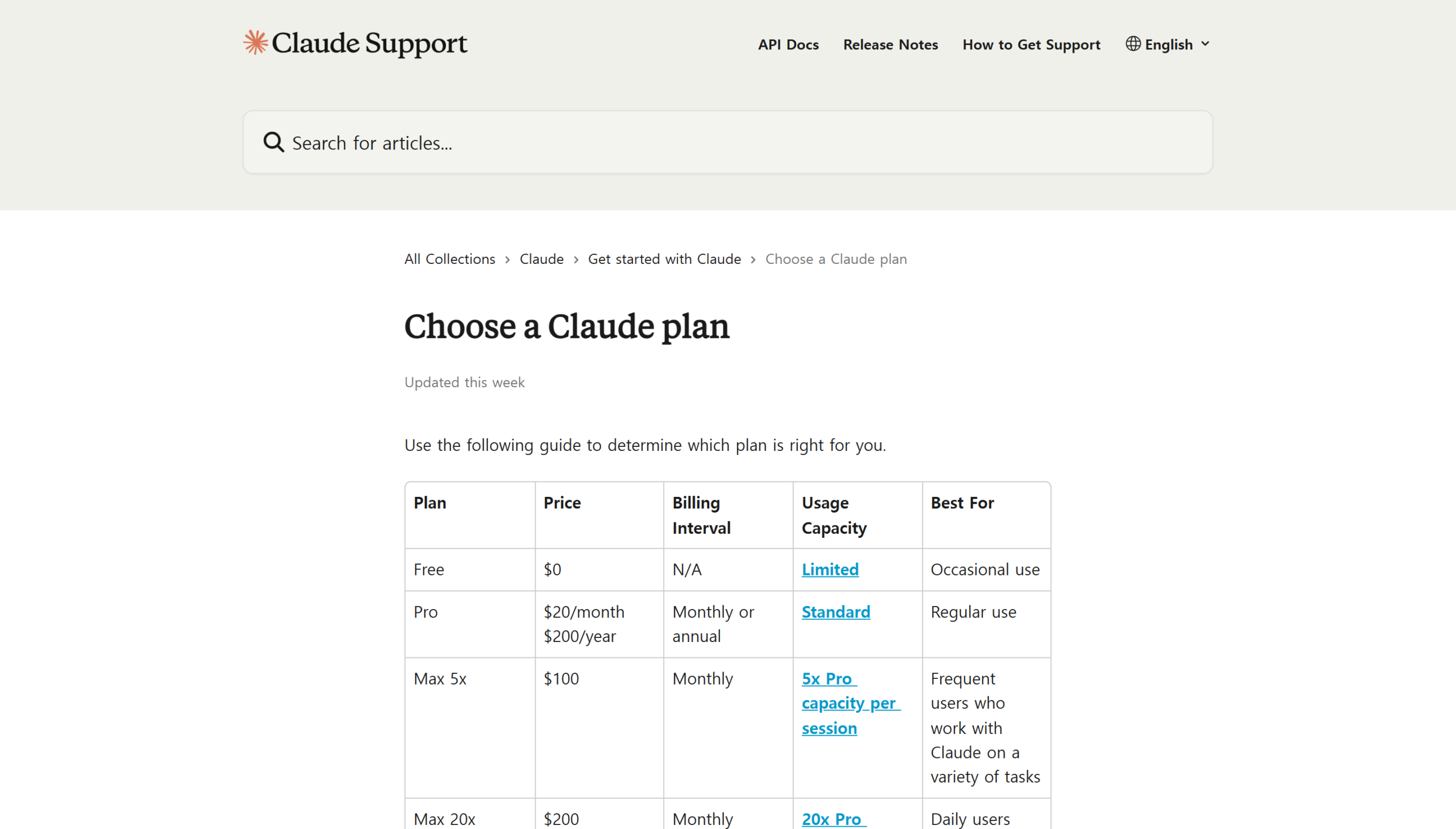
Anthropic’s official Claude plan page is clean: Free is $0, Pro is $20/month or $200/year, Max 5x is $100/month, and Max 20x is $200/month. Anthropic describes Max 5x as 5x Pro capacity per session and Max 20x as 20x Pro capacity per session.
Claude’s value is not just price. Many users choose it because they like the writing style, long-context work, careful reasoning, coding help, and Claude Code ecosystem. But the official usage model is session-based, and Anthropic’s support docs say paid Claude plans can show five-hour session limits and weekly limits. Claude also offers usage credits for paid plans, allowing users to keep working after reaching included limits by switching to pay-as-you-go pricing at standard API rates.
There is community heat around Claude limits. A Reddit thread claims Anthropic had been adjusting five-hour session limits during peak weekday hours, and users in the thread complain about limit pressure. Treat that as sentiment, not official confirmation. The official pages are the reliable source for plan prices and stated usage structure.
Best for: long-form writers, editors, researchers, developers doing code review or Claude Code work, and analysts who care more about output quality than having the widest feature bundle.
Watch out for: buying Claude Max because you hit limits once. First check whether your workflow is wasting context with long chats, repeated file uploads, or background coding tasks.
Grok through X Premium+: useful if X is your workplace
People search for “Grok Premium Plus,” but the official consumer subscription path here is X Premium+. X’s official pricing page lists U.S. web Premium+ at $40/month or $395/year. X says Premium+ includes expanded Grok access, higher usage limits, early access to new features, and an ad-free X experience. Its broader Premium FAQ also notes that prices vary by location, taxes, and app-store billing, and that mobile prices can differ from web prices because of app-store fees.
Grok’s strongest consumer argument is not “best all-purpose chatbot.” It is access to X-native information, creator workflows, and social-media research. If you spend hours on X for news discovery, audience research, content, politics, markets, or creator work, Grok plus Premium+ may make sense. If you only want document analysis, coding help, or study support, ChatGPT, Gemini, or Claude are usually easier to justify.
There is also community frustration around SuperGrok and Grok limits on Reddit, including complaints about unclear or reduced generation limits. Those claims are not official product facts. They are useful as a warning to check the exact limit dashboard, plan terms, and refund rules before buying a high-priced Grok-related plan.
Best for: X-first creators, social analysts, brand monitors, journalists tracking public conversation, and users who value ad-free X alongside AI access.
Watch out for: paying $40 mainly for Grok if you do not care about X Premium+ features.
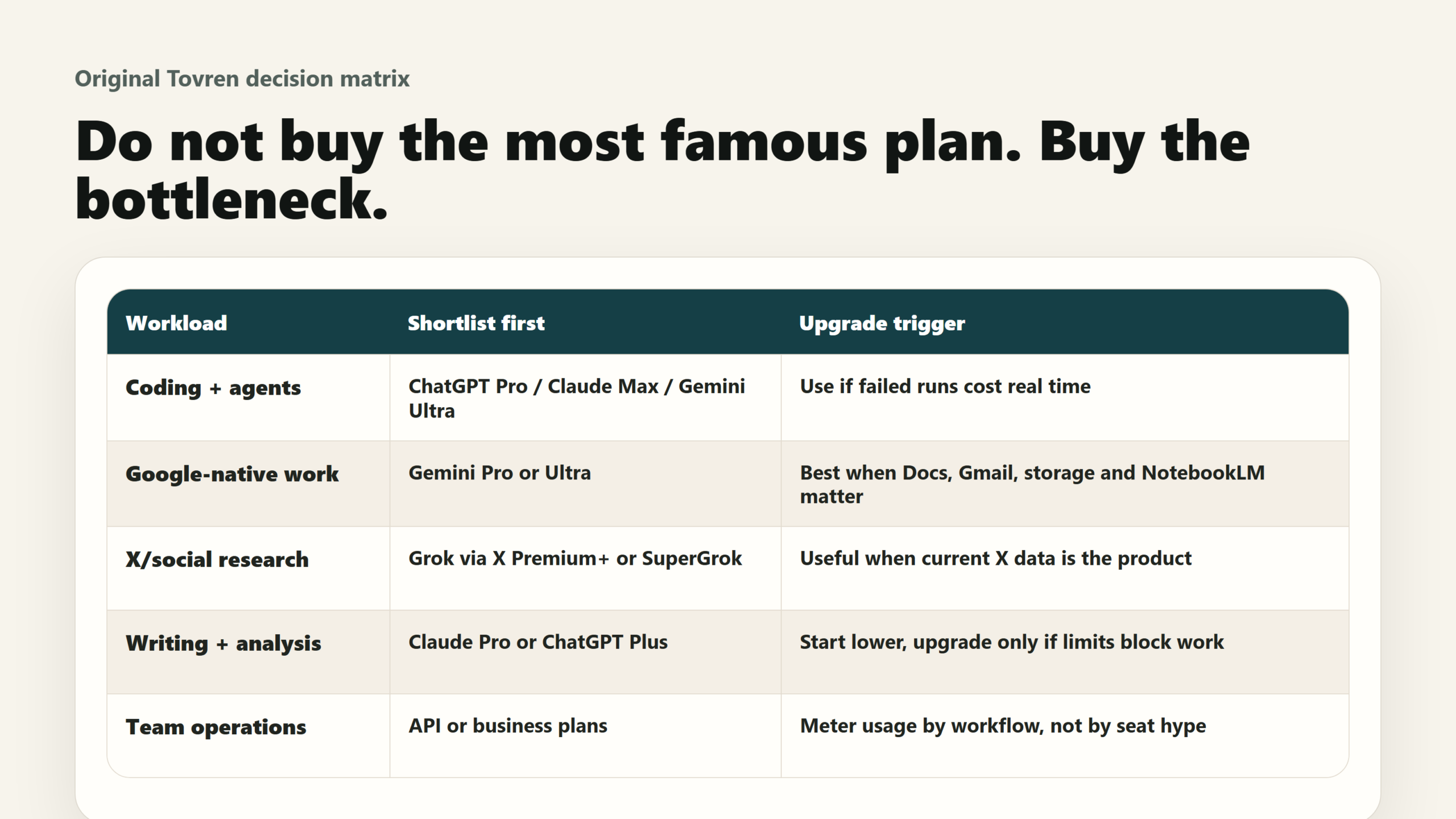
Which AI subscription should you actually pay for?
| User type | Best first paid plan | Upgrade only when | Likely mistake |
|---|---|---|---|
| Creator | ChatGPT Plus or Gemini AI Pro | You produce video, image, scripts, and campaigns daily | Buying every model instead of building one repeatable workflow |
| Developer | Claude Pro or ChatGPT Plus | Coding sessions hit limits during paid work | Using chat subscriptions for app workloads that need API billing |
| Student | Free first, then one $20 plan | Exam prep or research work needs file uploads and longer sessions | Paying $100+ for occasional homework help |
| Analyst | Gemini AI Pro, Claude Pro, or ChatGPT Plus | Deep research, long files, or repeated reports hit caps | Ignoring source control and verification because the model sounds confident |
| Small team | Team/business plan or API evaluation | Multiple people need governed access | Sharing one personal $200 account |
Concrete recommendations by budget
Who should stay free
- Use free plans if you ask a few questions a week, brainstorm casually, summarize short text, or test models before choosing.
- Students should stay free until they know which tool actually improves their study workflow.
- Creators should stay free if the AI is still a toy rather than part of a publishing process.
- Small teams should not use free plans for confidential client, legal, financial, or internal strategy work without checking data controls and terms.
Who should pay around $20
- Pay for ChatGPT Plus if you want one flexible assistant for writing, coding, image work, data analysis, study, and everyday problem solving.
- Pay for Google AI Pro if Gmail, Docs, Drive, Chrome, NotebookLM, and Google storage are already central to your work.
- Pay for Claude Pro if your main work is writing, editing, reasoning through documents, code review, or thoughtful long-form drafting.
The $20 tier is still the best value for most users. The squeeze is that $20 is becoming the “serious starter” tier, not the “power user forever” tier.
Who should pay $30–$40
- Pay for X Premium+ if your work happens on X and Grok is part of that workflow.
- It makes sense for social research, creator publishing, audience monitoring, rapid news scanning, and ad-free X use.
- It is harder to justify if your work is mostly documents, spreadsheets, codebases, or academic research.
Who should pay around $100
- ChatGPT Pro $100: good for users who rely on advanced tools across real projects during the week but do not need the $200 ceiling.
- Claude Max 5x: good for frequent Claude users who hit Pro limits while writing, coding, analyzing, or using Claude Code.
- Google AI Ultra $99.99: good for Google-heavy power users who need higher Gemini usage, storage, NotebookLM, Flow, and early advanced features.
The $100 plan is the new professional threshold. Buy it when one missed deadline or blocked client deliverable costs more than the subscription difference.
Who should pay around $200
- Pay $200 only if AI is part of your daily production system, not just your productivity stack.
- Choose ChatGPT Pro $200 for heavy multi-project use across research, coding, documents, and advanced tools.
- Choose Claude Max 20x if Claude is your primary writing, reasoning, or coding partner and session capacity is the bottleneck.
- Choose Google AI Ultra $199.99 if you need the higher Ultra usage tier, massive Google storage, and Google’s broader AI bundle.
Do not buy $200 plans for “peace of mind.” Buy them when you can name the bottleneck: “I hit limits three times this week during paid work,” “my coding agent sessions stall,” or “my research/reporting workflow requires multiple long runs per day.”
Who should use API or pay-as-you-go instead
Use API or usage credits when the work is automated, variable, or needs budget control per task rather than per person. Developers, data teams, and small agencies should test API costs before assuming a $100 or $200 chat plan is cheaper.
| Use API when… | Why it can beat subscriptions | Cost-control move |
|---|---|---|
| You run automations or apps | Personal plans usually are not meant to power products | Use API keys, budgets, and logs |
| Your usage is bursty | You pay for the heavy week, not every month | Set monthly spend caps |
| You process repeat documents | Caching and batch modes can reduce cost | Reuse context and avoid re-uploading |
| You need model choice | Use cheaper models for easy steps | Route simple tasks to smaller models |
| You hit Claude session limits | Claude paid plans can use usage credits | Enable credits with a strict cap |
A practical buying rule: subscribe to workflows, not logos
The trap is comparing brands instead of comparing work. A student writing essays, a YouTuber producing scripts, a developer fixing a repo, and a market analyst summarizing filings do not need the same AI subscription.
Use this rule:
- One-off help: stay free.
- Daily personal use: buy one $20 plan.
- Social/X-native work: consider X Premium+.
- Repeated paid deliverables: test a $100 tier for one billing cycle.
- Heavy parallel production: consider $200 only after measuring limit hits.
- Automated or client-facing workflows: use API, team plans, or governed business plans.
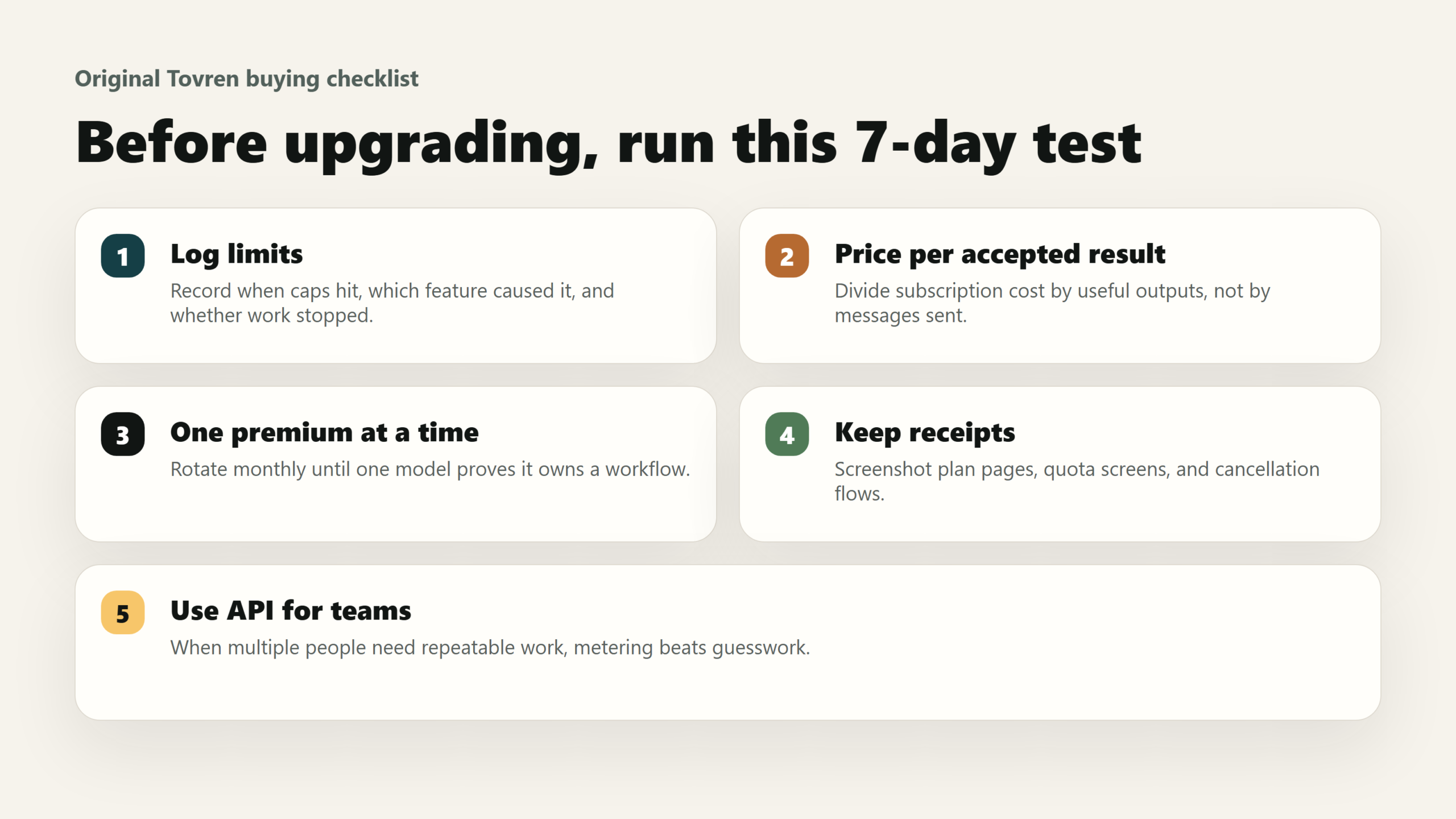
Decision checklist before you upgrade
- Did I hit usage limits at least twice during real work, not casual testing?
- Can I identify which feature caused the limit: long context, coding, deep research, image/video, files, or agent work?
- Would a fresh chat, shorter prompt, smaller file, or cheaper model solve the problem?
- Do I need one assistant, or am I paying for overlapping subscriptions?
- Is my work personal, team-based, or programmatic?
- Have I checked regional price, taxes, annual billing, app-store markup, and refund rules?
- Can I cancel after one month if the upgrade does not remove the bottleneck?
What is certain, and what is still fuzzy
Certain: official pricing pages show that the market has moved beyond the old $20-only model. Google, Anthropic, and OpenAI all now have clear $100-ish and $200-ish individual power tiers. X Premium+ sits around $40/month in the U.S. web price and bundles Grok access with X platform benefits.
Fuzzy: real-world limits can feel different from plan-page limits because modern AI usage is increasingly compute-based. A short simple question and a long multimodal agent task are not equal. Google explicitly says prompt complexity, feature choice, and chat length factor into Gemini app usage. Claude’s docs discuss five-hour session and weekly limits. OpenAI discusses higher limits and guardrails. Grok/X publishes Premium+ pricing and higher Grok access, but users should still check exact usage visibility before buying.
Community heat: Reddit threads show frustration and confusion around Google’s pricing ladder, Claude session limits, and Grok/SuperGrok transparency. That is useful buyer-signal, not proof. The safe reading is: before upgrading, assume limits can change, read the current plan page, and run one paid month before committing annually.
FAQ
What is the best AI subscription in 2026?
For most people, the best AI subscription in 2026 is one $20 plan matched to your workflow: ChatGPT Plus for general use, Google AI Pro for Google ecosystem users, or Claude Pro for writing, reasoning, and code-heavy work. Power users should only move to $100 or $200 after they can prove that limits are blocking real work.
Is ChatGPT better than Gemini, Claude, or Grok?
Not universally. ChatGPT is the broadest general-purpose choice. Gemini is strongest as a Google bundle with storage, Google apps, NotebookLM, and creative tooling. Claude is often the better fit for long writing, careful reasoning, and code review. Grok makes the most sense for users whose work is tied to X.
Is Google AI Ultra worth $99.99 or $199.99?
Google AI Ultra is worth considering if you already rely on Gemini, Google Drive, NotebookLM, Flow, Gmail, Docs, Chrome, and Google’s broader ecosystem. It is harder to justify if you only want a chatbot. The $99.99 tier gives higher usage than AI Pro, while the $199.99 tier is aimed at much heavier usage.
Is Claude Max pricing worth it?
Claude Max pricing is worth it for frequent Claude users who hit Pro limits during paid work. Max 5x at $100 is the practical first upgrade. Max 20x at $200 is for daily users who collaborate with Claude across many tasks. If you only occasionally hit limits, try shorter chats, better context management, or usage credits first.
Should developers use subscriptions or API access?
Developers should use subscriptions for interactive coding help and API access for apps, automations, batch jobs, client workflows, or anything that needs logs, keys, budgets, and predictable billing. A $20 or $100 chat plan is not a substitute for production API architecture.
Source Log
- Google AI Pro & Ultra subscriptions — Google Gemini official subscriptions page — https://gemini.google/us/subscriptions/?hl=en — Accessed May 23, 2026. Used for Google AI Pro $19.99, Google AI Ultra $99.99/$199.99, 5x/20x usage statements, storage, NotebookLM, Agent Mode, Google Flow, and compute-based usage-limit language.
- Choose a Claude plan — Anthropic Claude Help Center — https://support.claude.com/en/articles/11049762-choose-a-claude-plan — Updated this week; accessed May 23, 2026. Used for Claude Free, Pro, Max 5x, and Max 20x pricing and usage-capacity descriptions.
- About ChatGPT Pro tiers — OpenAI Help Center — https://help.openai.com/en/articles/9793128-what-is-chatgpt-business — Updated two days before access; accessed May 23, 2026. Used for ChatGPT Plus $20, Pro $100, Pro $200, 5x/20x limits, included advanced capabilities, and guardrail notes.
- Premium+ Price Adjustment — X Help Center — https://help.x.com/en/premium-plus-price-update — Published for February 18, 2025 price update; accessed May 23, 2026. Used for X Premium+ U.S. web pricing at $40/month and $395/year, plus expanded Grok access, higher usage limits, early access, and ad-free X claims.
- About X Premium / X Premium FAQ — X Help Center — https://help.x.com/en/using-x/x-premium and https://help.x.com/en/using-x/x-premium-faq — Accessed May 23, 2026. Used for Premium+ feature framing, regional pricing caveats, app-store fee differences, and subscription/refund caveats.
- The Google AI Pro plan just got a quiet downgrade — Android Central — https://www.androidcentral.com/apps-software/ai/google-ai-pro-plan-just-got-a-quiet-downgrade — Published May 20, 2026; accessed May 23, 2026. Used as secondary reporting on Google AI Pro moving toward credit/compute-based usage windows and user frustration.
- OpenAI API pricing — OpenAI — https://openai.com/api/pricing/ — Accessed May 23, 2026. Used for API/pay-as-you-go comparison and current token-pricing context.
- Claude API pricing — Anthropic — https://platform.claude.com/docs/en/about-claude/pricing — Accessed May 23, 2026. Used for API/pay-as-you-go context and model-cost comparison.
- Gemini Developer API pricing — Google AI for Developers — https://ai.google.dev/gemini-api/docs/pricing — Accessed May 23, 2026. Used for API/pay-as-you-go context, free/paid API tier framing, and search-grounding cost caveats.
- xAI models and API pricing — xAI Docs — https://docs.x.ai/developers/models?cluster=us-east-1 — Last updated May 15, 2026; accessed May 23, 2026. Used only for Grok developer availability context and the reminder that real-time data requires search tools.
- Google Gemini pricing ladder Reddit thread — Reddit r/GoogleGeminiAI — https://www.reddit.com/r/GoogleGeminiAI/comments/1ti6fmj/google_just_dropped_a_whole_new_gemini_pricing/ — Accessed May 23, 2026. Used only as community signal about confusion, regional pricing discussion, and storage bundling reactions.
- Grok/SuperGrok limits Reddit thread — Reddit r/grok — https://www.reddit.com/r/grok/comments/1tcyxpq/supergrok_subscription_straightup_scam_xai/ — Accessed May 23, 2026. Used only as community sentiment around unclear or reduced limits; not treated as verified fact.
- Claude five-hour session limits Reddit thread — Reddit r/claude — https://www.reddit.com/r/claude/comments/1s762l8/anthropic_confirmed_it_has_been_quietly_adjusting/ — Accessed May 23, 2026. Used only as community sentiment around Claude limit pressure; official pricing and limits are taken from Anthropic sources.